
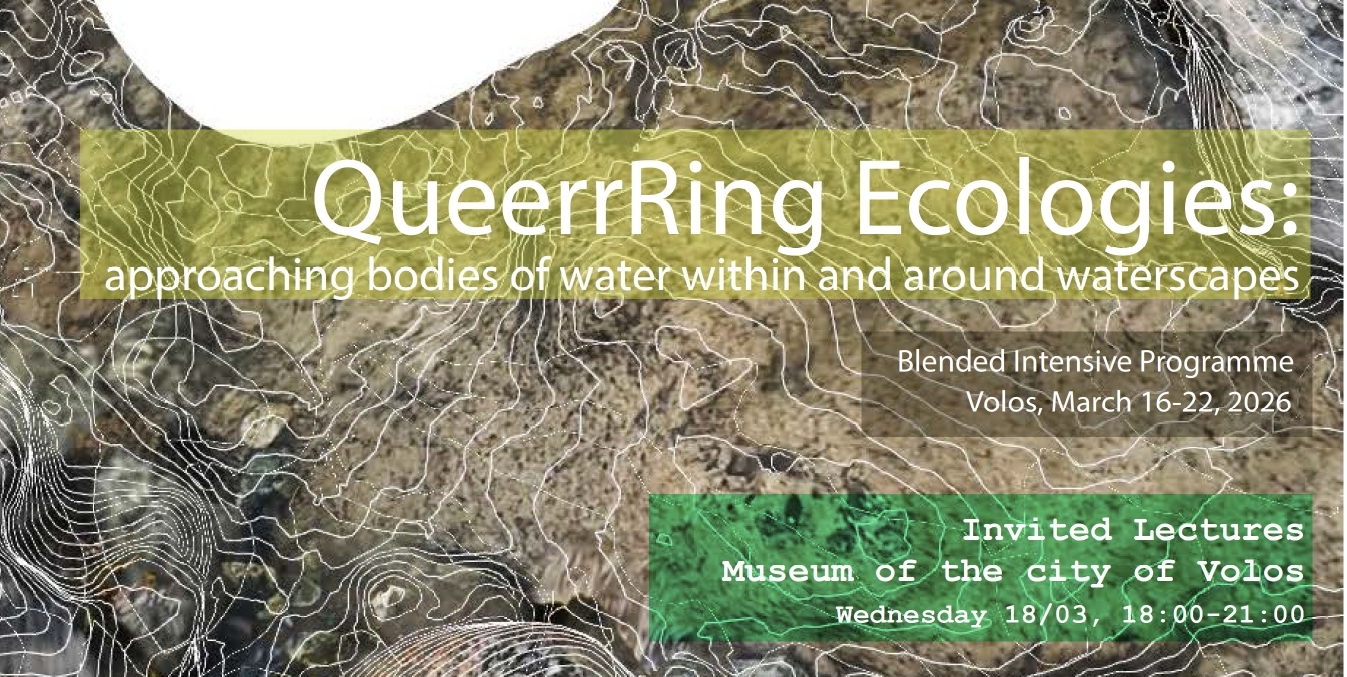
QueerrRing Ecologies: approaching bodies of water within and around waterscapes Blended Intensive Programme, Volos, 16–22 March 2026 Department of Architecture and Department of Culture, Creative Media and Industries, University of Thessaly | École supérieure des Beaux-Arts de Bordeaux (EBABX) | École de Recherche Graphique, Brussels (ERG) | Erasmus+
Participation in the Bodily Waters section of the Invited Lectures at the Museum of the City of Volos (Wednesday 18/3, 18:00–21:00) with a performative poem lecture titled “Water as a feminine power”, and Silent Walk at the historic shore of Lake Karla (Tuesday 17/3).
Water as a feminine force, a fluid state
Water, the water within us, the water outside, water as a feminine force, a fluid state, water in our bodies. Our body is aquatic. We exist in a perpetual state of “hydrodynamism.” The idea of human privilege — in my view — is mistaken; we are directly connected to the commons of the planet, to water. The fluidity of water is linked to woman, to femininities; we are fluid like water.
The sea. The sea around the island, the sea you face in the morning, the sea your body feels, the sea that embraces you, that touches you. Water makes you glide, makes you alive.
Flea, fle(v)a. A wonderful word from the Sifnian dialect. In Sifnos, this is what they call the water source, the flowing water. Our body has veins. Blood runs through our veins. Flea: the underground current of water, spring surface water — the flea of Masoutthis, the fleas of Prophet Elias, the Flei. The fleas at Poulatι. The flea of Kalamitsι: a small, inexhaustible spring among rocks at the Froudi of Baronas (a Mycenaean acropolis near the Black Village), a flea in the riverbed of Kastro at Erkies or Sergies. There is the spring of Giannis, of Ygieinι (mentioned by Herodotus for the island’s renowned water).
The Fountana or Fontana of Kastro. Years ago, we carried out an environmental action at the Fountana: we cleared it of weeds and invited people with whom we spoke about the significance of this spring, beneath the settlement of Kastro, from where the inhabitants once drew their water. We admired the very ancient marble carvings. Water barely dripped. The French traveller Tournefort informs us that the French consul in Sifnos, in the year 1717, “assured him that this communal spring, located at the bottom of the valley leading to the port of Seralia, is among the oldest works on the island.” It was Antonis Troullos who gave us information about this spring and others, in his effort to show, through his accounts, the value of water and the wise management that was once practiced.
The flea of Lefkia. An old flea, which emerged from the estate of Panorios. “This generously refreshed the lips of the nuns of the Chrysostomos monastery as well as the inhabitants of the small settlement around Chrysostomos.”
In winter the torrents run. In Sifnos, torrents are called rivers. The river of Erkies, the river of Livadas…
Potamia, potamnia, potamos. The banks and the riverbed.
Chavouza (Turkish: havuz). A cistern, a watertight tank, a reservoir.
Sterna, kisterna (cisterna). A rainwater cistern, a built water tank, private and public or communal: “kitchen with cistern” (Petropoulos, 1808), “it rains for a full day and night, the cisterns have filled” (T. Vellis), “the cistern is almost full” (A. Kakakis).
There are three watermills in Sifnos.
Koutendo, kounteto (Italian: condotto d’acqua). A clay water pipe or a built drainage ditch, covered by slightly inclined slabs for channeling water (e.g. “they broke my koutenda and I can’t irrigate”).
Most houses in the settlements have cisterns that are still in use. The cistern is located underground or in the courtyard. Rainwater is collected in the cisterns and used for household needs. Each autumn, the roof and gutters are cleaned so that water reaches the cistern.
The water in the fleas is fluid, it moves. In swimming pools it is still, it does not move. You swim in water without movement, you deprive water of nature so it becomes yours alone. You think individually and not as part of a whole. You could be swimming in the fluid, living water of the sea…
Water is a common good. People with swimming pools are distinguished by individualism. In places like the Cyclades, people build pools while there is often not even enough water to drink. Drilling has caused many springs to dry up. “At first everyone drilled a borehole, then the law about 500 metres came in.”
In August, from the sea I pulled out plastic threads, plastic bottles, plastic…
It was a mistake to mix the drinking water with desalinated water; it stopped being drinkable. It was a hasty solution, because the water was not enough. To have water and a pool, he drilled a borehole, and the nearby spring dried up…
I seek the paths of water on the island. What do we do with these paths? Late capitalism claimed water as its own, mixed it, exploited it, filled it with plastic, cement, rubbish.
“We are water,” that woman cried at the demonstration. Water is our body. We want our bodies back, we want the water, we want the fleas to gush water again.
We are interconnected through our watery bodies. Otherwise we will die.
She saw only death around her, as very few springs, fleas, run with water anymore and most people have stopped sharing it…
The water ran through our bodies during those few moments we shared… That sensation on the body will stay with me, unforgettable. You said it reminded you of something from the past. Stories of water and bodies…
To understand the desolation of cities you needed to see the water drying up, the frogs falling silent; then you realised the necessity of water, then you dreamed of the flea…
Scientists from Australia studied the earthy scent of rain and named it “petrichor,” from the combination of the words “petra” (stone) and “ichor,” the golden fluid that, according to Greek mythology, flows through the veins of the gods. A scent that originates from spore-bacteria living in the soil, which the human sense of smell can detect when raindrops disperse it.
Let us create a more spacious, watery world that we share, through ethical and courageous decisions about water on the island.
Thoughts, accounts, and actions concerning water could help us create an imaginary that responds to human and non-human beings — those with whom we share planetary existence — to return to the old stories of water paths, of fleas, of the sea, to learn from them, to tell them again: more empathy and action for water…
Eleni Tzirtzilaki (nomadikiarxitektoniki.net), Dawn, Sifnos
How can you dream
awake
as you walk on the sand
as if entering the depths of the earth
touching its seabed
its entrails
and then the dreams
came from the water
as the birds were flying
a sad song
of its own
was coming
as it touched the earth
a sad song of the earth
to touch you
to touch the chest
and then the belly
and then deep inside
it wanted to share your embrace
somewhere beyond it was alone
somewhere else
a stranger now it lived
and the dream felt foreign
a person alone
a woman alone
on the earth
on the sand
a fisherman’s boat in the depths of the sea
reminded you
of those wild days
in the deep past
where the sun was lost
in the emerald colours of spring
of the deep and the wind
the rebellion of Antigone
as the birds circled around the mountains
and the face grew calm
the smile came to remind
the hands
the feet
the gaze on the earth
the song of the wind
touched you
and you wanted the earth to become again
from the beginning
with trees, flowers, birds, animals
without rubbish
without wounds
the earth ours
to become
and then she saw the blood
of those people who had bled for the earth
and the blood stained the blue sea
a bird in the distance was crying out
another was singing sweetly.
Ode to a forgotten flea of another time
The nymphs and water spirits weep
and Pan has been exiled
to the ravaged bank
— what kind of world do we want to live in?
As the wind returned
the sound of water has been lost.
I cannot hear the frogs
their songs
and Anna is no longer here
at the crossroads in the silent house
the house empty,
only the furniture draped in death’s gauze
Anna absent only in photographs and in objects
and the photographs without a soul.
The girls at the well of Kleídonas
sought the unspoken water to dream of their love
we left love
behind in metropolises
in distances
in televisions with war news
and water in plastic bottles.
We walked in the river they had cemented
three women inside the dry river
seeking the unspoken water
in a waterless age
the river has been lost
and Anna, together with the nymphs and Pan,
appears on the stone paths.
That night it rained without ceasing the water
struck the glass and the walls of the house all night
long a river had risen on the path
I went outside into the water
unguarded soaked through entirely the sea
trembled in the distance
I dreamed my body inside the water in a different life wrapped in seaweed and sea flowers the fish lived close to me
and you were a fish-person.
The water in the Aegean
drowns people
mostly women and children
today they drowned the coast guard sank another boat again the sea
filled with blood
and flesh the water we swim in the water
we love in the Aegean in the Cyclades on the island.
There the nymphs are still free in water
ceremonies nymphs,
daughters of the sky who were born from his blood dripping on the earth among trees and waters they live night and day
they make love among themselves.
In the flea there are wild goats
they stored water in clay jars.
Can the relationships between women be like the soft fur of the cat
the cat-fox?
Can they embrace inside the water
fall in love — dream?
The sound of the wind
the empty houses
the voices of the sea
enter my womb
then I hear them in my heart
voices of the Aegean
the pleasure of the wind
the pleasure of the sea’s waves.
Birds are by nature the happiest creatures in the world
especially the birds that live in the Cyclades
usually migratory birds
could we be one of them? Bird-woman.
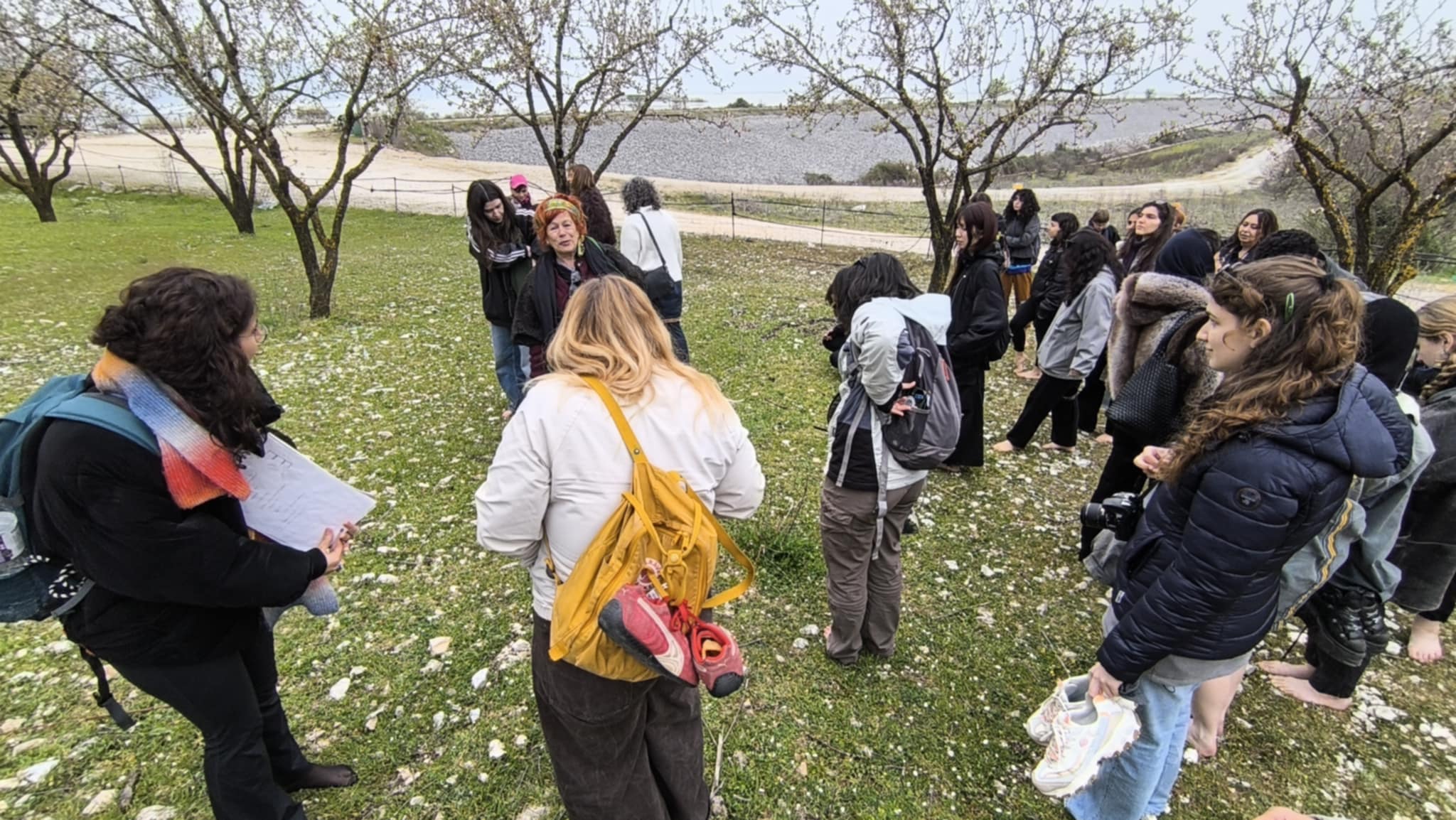
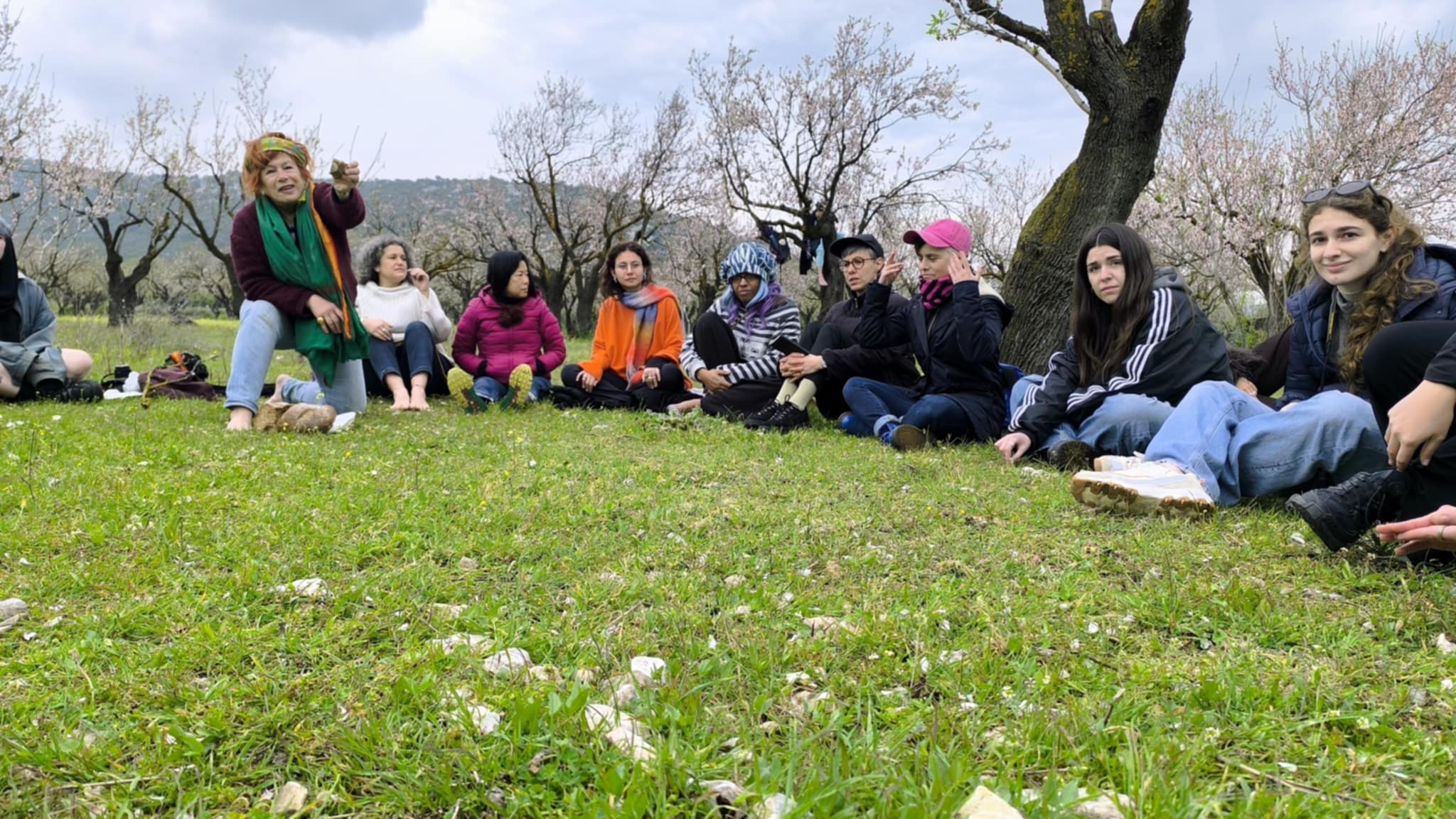
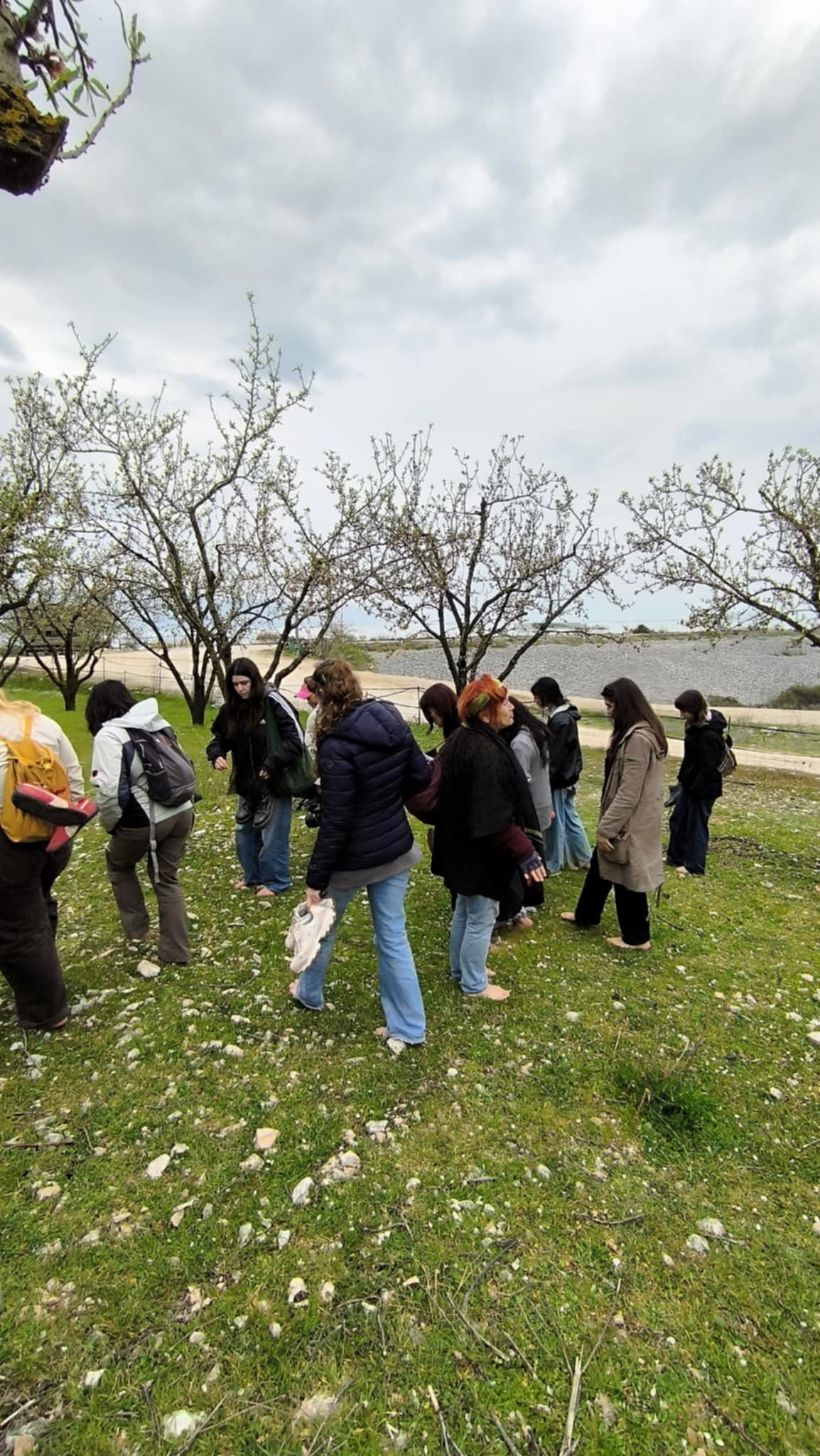
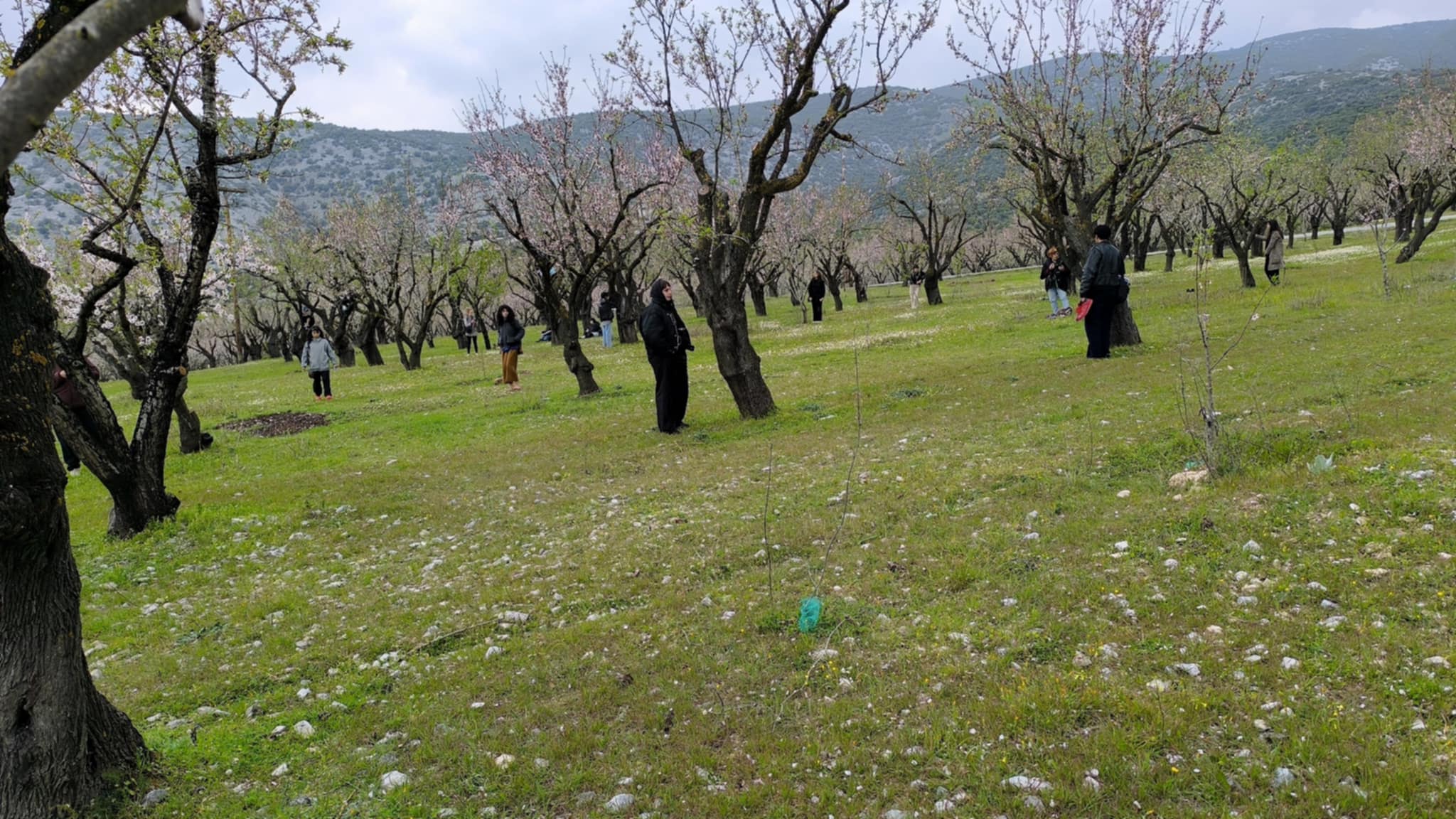
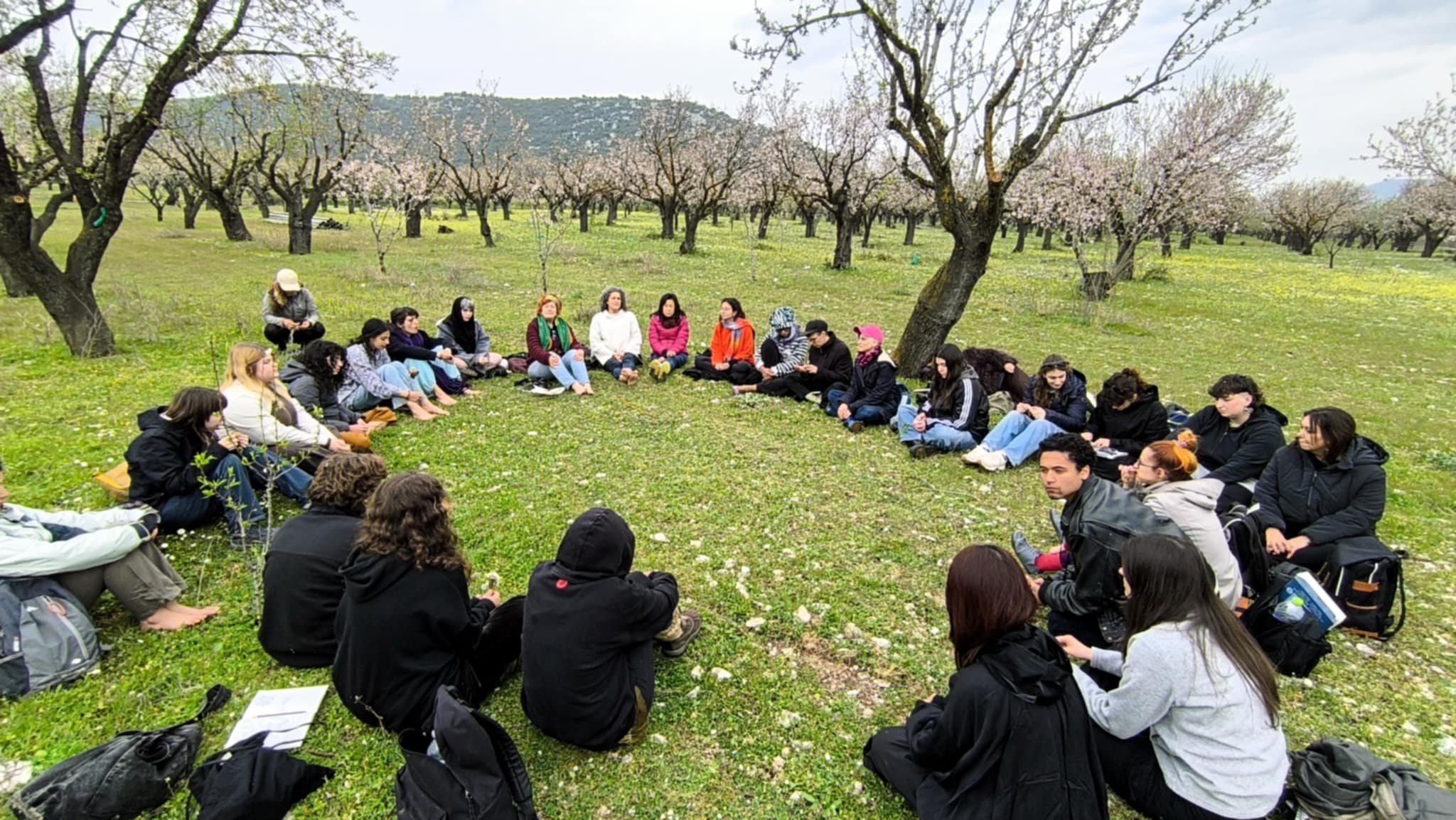
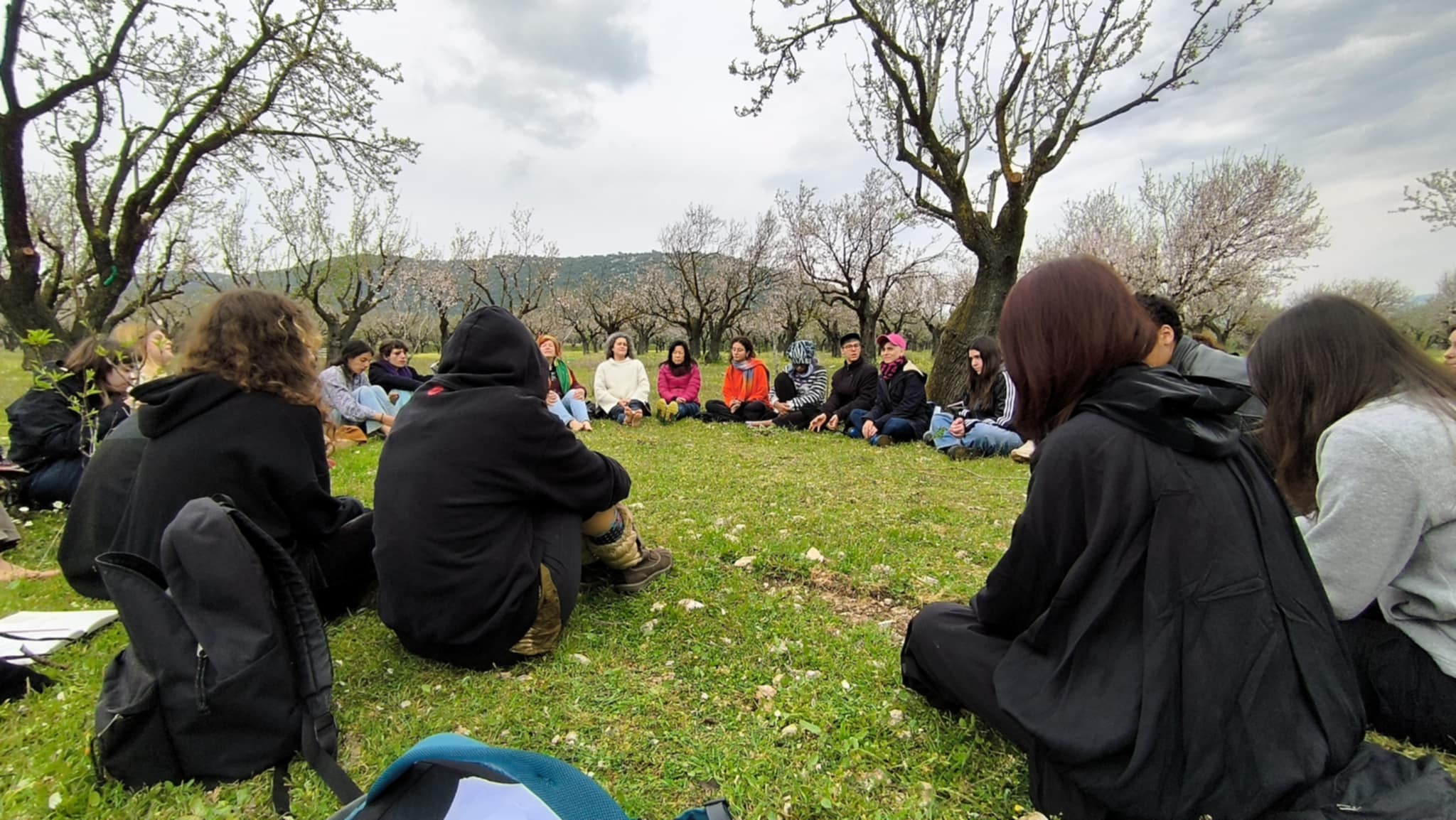
Silent walk at lake Karla. A ritual for care sharing our connection to earth
A journey amongst lakestones
We walked silently
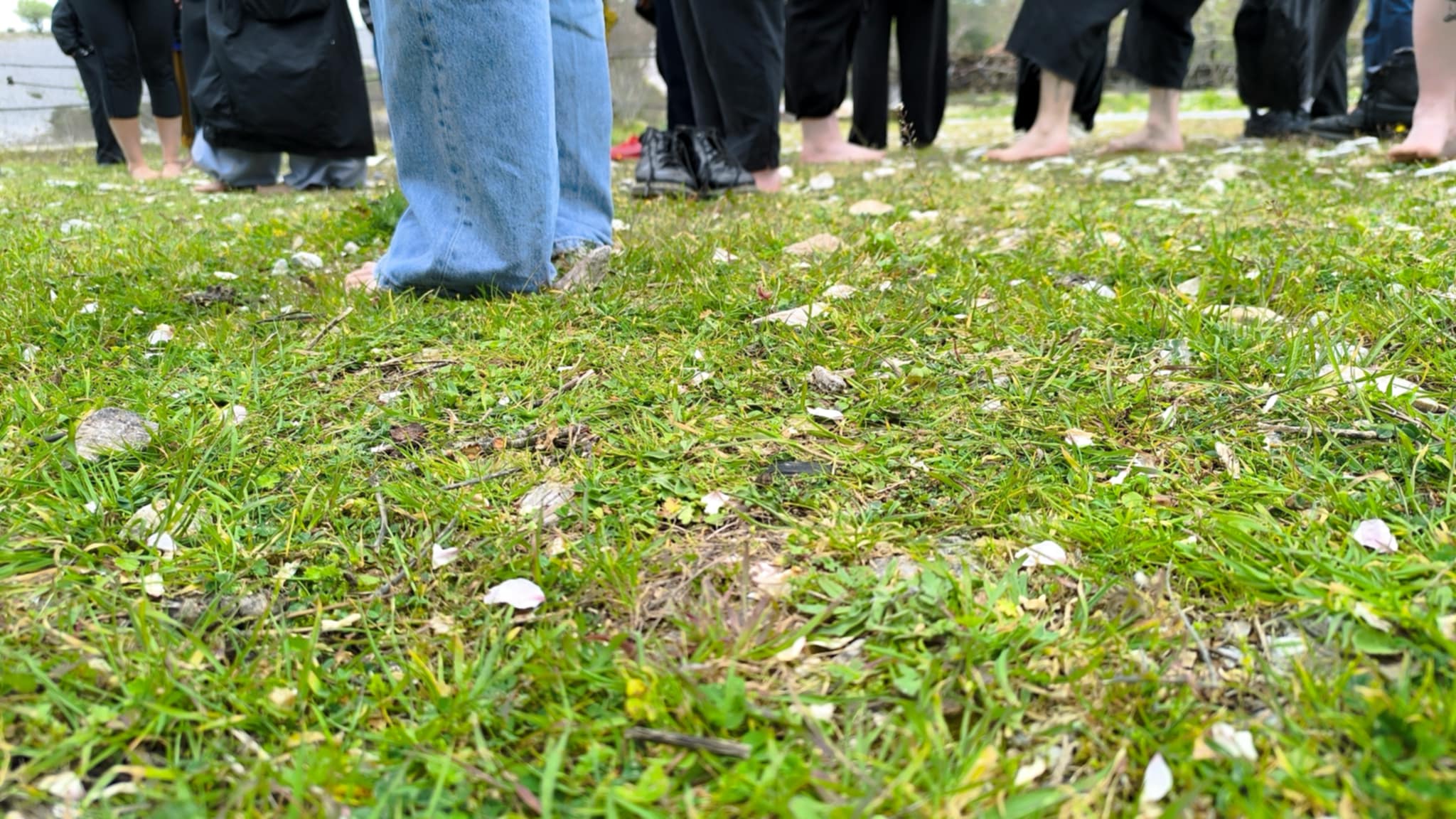
bare foot
on pebbles
wild weeds and almond-tree petals
our faces were painted
I looked at your eyes from the future
and wanted to caress you
your long hair
to kiss your bare toes
the pain felt by our feet
touching the lakestones
the flower petals
was sweet
boundless bliss
as the body listened
and the blood was dripping
the animals went downhill from the pens to grease
only up to here, now
the routes have been forbidden
the journeys to mt Grammos
they were imprisoned in the pens…
the herdsman’s weeping was unspeakable..
we hugged the trees
we climbed on their branches
our body mangled among the branches
the trees had bodies and heart
we lay on the ground
the flowers intermingled within our hair
the flight of birds on the lake
we heard out inner voice
.
for the earth we did not feel, which we abandoned.
The red cows cross the shore
the birds approach to the circle of beings at the lake
I touched your hand
and cut the bread
It only was a slice of kneaded bread
I think of you these days
you are there
somewhere far
behind the sea
I wonder if I want to come near you
or if I prefer being here among the branches and the flowers
and the lakestones.
What can we recall from the trees?
what can we recall from the flowers?
What can we recall from the birds?
from the lake?
From the earth we did not feel, which we abandoned?
From these days together
when the bodies sand as they touched each other?
flowers of almond -trees were flowing in our blood…..
Lenou Tzi, March 2026